

Amethyst meanings & History
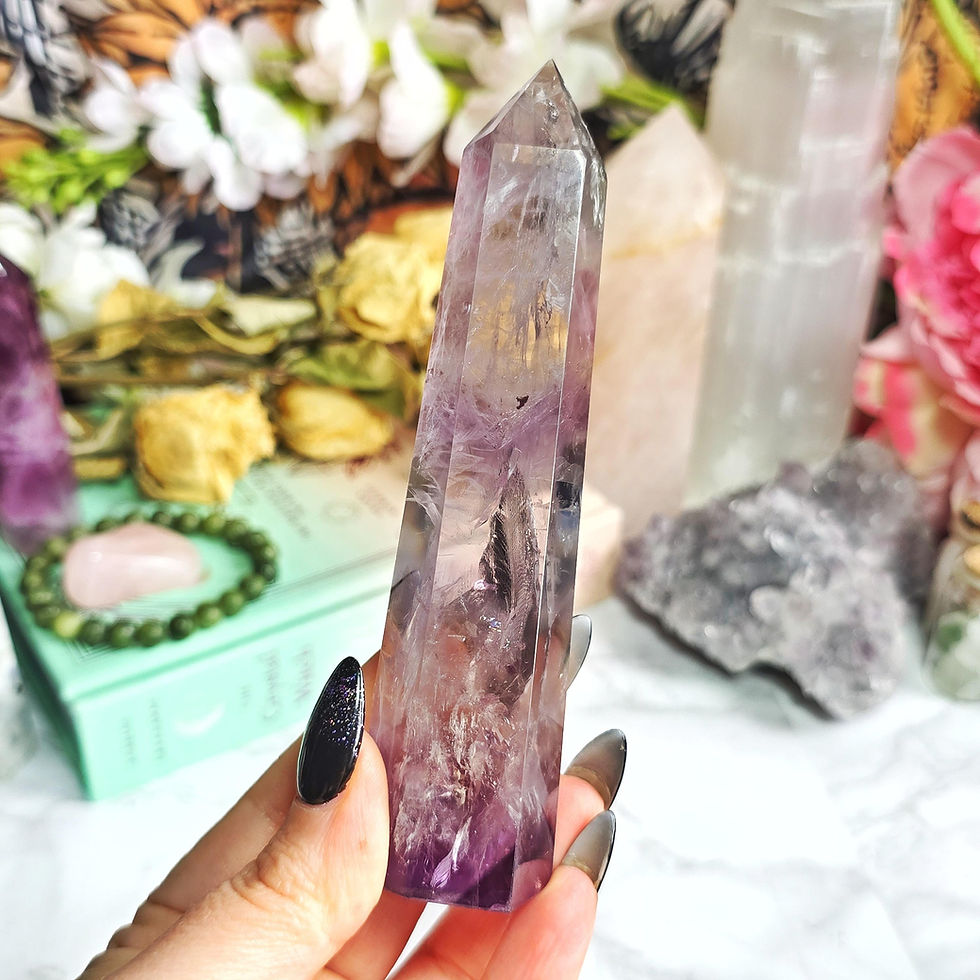
Amethyst is a purple variety of quartz that ranges in colour from pale lavender to deep violet. It has been used for thousands of years in jewelry, decoration, and religious objects, making it one of the most recognised crystals worldwide.
History
Amethyst has a long record of use in human history. Beads of amethyst have been found in graves dating back to around 3000 BCE in Egypt. The ancient Greeks and Romans carved amethyst into intaglios and amulets. The word “amethyst” comes from the Greek amethystos, meaning “not intoxicated,” and the stone was often associated with sobriety in classical texts. Cups carved from amethyst were used in the belief they could prevent drunkenness.
In medieval Europe, amethyst was highly valued and used in royal jewellery and church treasures. Bishops’ rings often contained amethyst as a symbol of piety and spiritual focus.
Amethyst appears in the Bible in two key places. In Exodus, it is one of the twelve stones on the High Priest’s breastplate, each stone representing one of the tribes of Israel. In the Book of Revelation, amethyst is named as one of the twelve foundation stones of the New Jerusalem.
Large deposits discovered in Brazil in the 18th century made amethyst more widely available, shifting it from a gemstone prized alongside rubies and emeralds to a more common, affordable stone.
Chakra


Geology
Amethyst is a variety of quartz coloured by trace amounts of iron. When exposed to natural radiation within the earth, the iron impurities create the purple colour. It crystallises in the trigonal crystal system, often forming six-sided prisms or lining the inside of geodes. Amethyst has a hardness of 7 on the Mohs scale. Major sources include Brazil, Uruguay, Zambia, and Madagascar.




Zodiac


Planet


